DSG Upgrades
Clutch Pack Upgrades
If you are making real power with a C7 S6 or S7, the factory DL501 clutch pack eventually becomes one of the major limitations. The stock 4.0T clutch is stronger than the version used in many 3.0T cars, but additional torque, repeated launches, heat, mileage and aggressive TCU calibration can still lead to slipping, lazy engagement or excessive clutch adaptation values.
An upgraded clutch pack adds friction capacity and, depending on the design, may also improve clamping capability and heat management. The clutch with the highest plate count is not automatically the best option. Plate thickness, friction material, steel-plate thermal capacity, basket design, TCU calibration and normal street drivability matter just as much as how many discs were stuffed inside the basket.
Important: Nearly every upgraded DL501 clutch requires a TCU tune that properly increases clutch pressure and recalibrates engagement. Installing an upgraded pack while continuing to use stock or poorly configured TCU software can still result in slipping, overheating and premature wear.
Major DL501 Clutch Upgrades
Published torque ratings are manufacturer claims and should be treated as general selection guidance, not as a guarantee. Actual holding capacity depends heavily on clutch pressure, TCU calibration, transmission condition, vehicle weight, tire grip, launch frequency and how aggressively the car is driven.
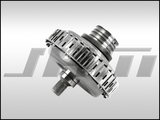 |
Published capacity: Approximately 850 to 900 lb-ft JHM's R15 replaces the factory 13-friction 4.0T arrangement with a 15-friction assembly. It is intended for higher-output street and performance builds while retaining normal engagement and drivability. Configuration: 15-friction complete clutch assembly
Core: New assembly without a core exchange Software: TCU calibration with increased clutch pressure required Pressure: 20+ bar recommended for the published torque capacity Fitment: C7 S6 and S7 baskets using the 103 mm, 81-tooth oil-pump gear |
|
GPO
DL501 Clutch Packs
|
Published capacity: GPO offers several DL501 configurations instead of forcing every car into the same clutch. Stage 2 is the normal high-power street option. Stage 3 uses a 17-friction arrangement and is intended for large-frame turbo, single-turbo, nitrous or 1,000-plus-horsepower combinations. Configuration: Stock rebuild, 13-friction, 15-friction or 17-friction
Core: Send in a rebuildable clutch or purchase a new core Software: High-pressure TCU calibration required Pressure: 20+ bar required for the higher stages Warning: Stage 3 can move the failure point into the factory gearset |
 |
Published capacity: TVS does not currently publish a specific torque figure on the main product page TVS sells a new plug-and-play DL501 racing clutch rather than a loose friction kit. Its design focuses on friction area, steel-plate thickness, thermal capacity and drivability instead of simply forcing the highest possible number of thin plates into the basket. Configuration: Complete new clutch assembly
Condition: New Core: No core return listed Software: TVS Stage 4 DL501 software required Best fit: Owners using the complete TVS hardware and software package |
|
SRM
Silly Rabbit Motorsport
|
Published capacity: SRM offers two clutch levels specifically listed for the C7 S6 and S7. Level 1 is the normal street and hybrid-turbo option. Level 2 is aimed at significantly more aggressive builds where the stock clutch or lower-capacity upgrade will not hold. Configuration: Level 1 or Level 2 upgraded assembly
Core: Refundable core program New cores: Sometimes available Software: Upgraded TCU tuning required Fitment: Specifically listed for the C7 S6 and S7 4.0T |
|
DODSON
Motorsport
|
Published capacity: No public torque figure listed Dodson's DMS-8572 Superstock 6/7 is a dedicated DL501 clutch kit for higher-torque street and performance applications. Dodson describes its DL501 range as direct-fit upgrades intended to retain fast shift response and smooth drivability. Part number: DMS-8572
Configuration: Superstock 6/7 clutch kit Purchase: Available through authorized Dodson dealers Software: Confirm the required TCU calibration with the supplying dealer Fitment: Confirm the exact basket and oil-pump gear before ordering |
|
SSP
Performance
|
Published capacity: Up to 800 lb-ft SSP advertises a 13-plate DL501 clutch-disc package designed to install inside the factory clutch basket. The listing claims the discs have been tested beyond 800 lb-ft when properly tuned. Configuration: Friction-disc package for the factory basket
Core: Reuses the original clutch basket Software: Proper TCU tuning required Fitment: SSP primarily lists B8 and RS5 applications Warning: Confirm C7 S6 and S7 compatibility directly with SSP before ordering |
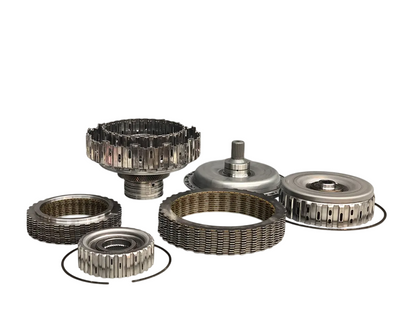 |
Published capacity: DEKA lists three DL501 configurations. Stage 1 is a clutch-only package. Stage 2 adds an upgraded basket and additional friction capacity. Stage 3 uses a larger 9/9 friction arrangement intended for competition use. Configuration: Clutch-only, upgraded-basket or competition versions
Core: Confirm the selected configuration directly with DEKA Software: Matching TCU calibration required Availability: Confirm current availability directly with DEKA Note: The product description has previously referred to the transmission as a DL800 in one section |
Stock Replacement and Rebuild Options
These products can be useful for repairing or rebuilding a DL501, but they should not automatically be treated as high-torque performance upgrades. Some restore factory capacity, while others provide replacement friction material without changing the number of plates or the clutch basket.
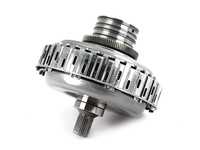 |
A complete genuine Audi replacement clutch assembly for the C7 and C7.5 S6 and S7. It restores the transmission to factory clutch capacity rather than increasing its published torque rating. Brand: Genuine Volkswagen Audi
Part number: 0B5 141 030 F Configuration: Complete factory clutch assembly Fitment: C7 S6 and S7 4.0T Source: ECS Tuning Best fit: Stock-turbo cars, mild tunes or owners prioritizing factory operation |
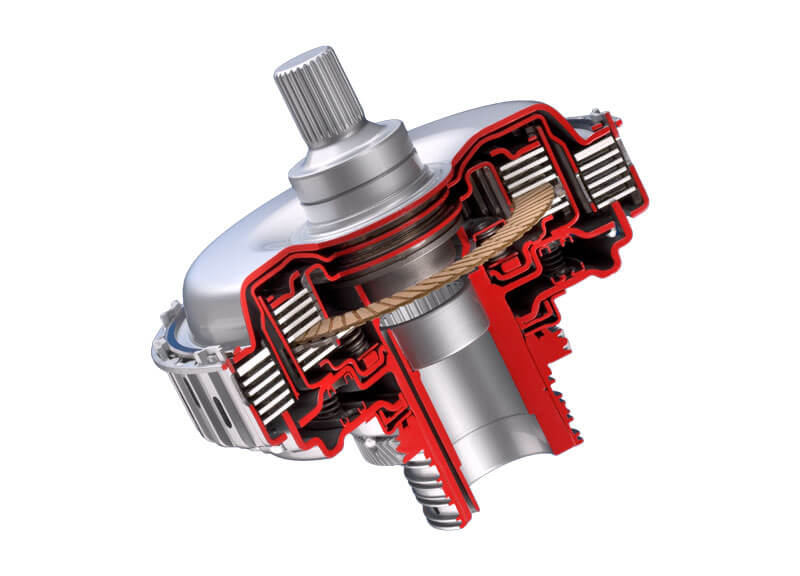 |
BorgWarner offers complete replacement clutch modules for the 0B5 and DL501. This is an OE-style replacement solution rather than a dedicated high-torque C7 S6 or S7 performance clutch. Configuration: Complete OE-style clutch module
Source: BorgWarner directly Best fit: Professional factory-style rebuilds where a complete replacement module is preferred Fitment: Confirm the exact module part number before ordering |
 |
Raybestos offers a replacement friction pack containing five K1 and six K2 GPZ friction plates. A matching steel-plate pack is also available for builders rebuilding the original clutch assembly. Part number: RCP96-302
Configuration: Five K1 and six K2 friction plates Basket: Not included Rating: No dedicated C7 high-torque figure published Source: Raybestos Powertrain directly Best fit: Experienced transmission builders performing a complete DL501 rebuild |
Which DL501 Clutch Should You Buy?
For most tuned C7 S6 and S7 builds, the real shortlist is the JHM R15, GPO Stage 2, TVS Race Clutch or SRM Level 1. Those options provide meaningful additional capacity for most upgraded-turbo combinations without immediately jumping into an extreme competition-only setup.
GPO Stage 3, SRM Level 2 and DEKA Stage 3 are aimed at genuinely high-output builds. At that level, clutch slip may no longer be the primary concern. The factory gears, shafts, mechatronics, cooling system and differential components can become the next weak links. Buying a clutch rated for a massive torque number does not make the rest of the DL501 capable of safely handling the same number.
The clutch should be selected around the actual torque target, intended use, launch frequency, vehicle weight, tire grip and available TCU calibration. A properly matched clutch and TCU tune will usually drive better and last longer than an oversized race clutch purchased only because it had the largest advertised number.
Installation Considerations
- Confirm the clutch-basket part number and oil-pump gear before ordering.
- Confirm whether the clutch includes a new front-cover seal and cover O-ring.
- Replace the clutch-cover seal and related O-rings during installation.
- Inspect the mechatronics, clutch-pressure performance and adaptation values before blaming every slip event on the friction pack.
- Use the fluid and service procedure required by the clutch manufacturer or transmission builder.
- Perform all required clutch adaptations after installation.
- Do not assume an aggressive shift is a good shift. Excessively harsh high-load shifts can damage the factory gearset even when the clutch itself holds.
TCU Tunes
The factory DL501 programming in the C7 S6 and S7 is not terrible, but it was written around stock torque, smooth dealership test drives and keeping the average owner from complaining. Once you tune the engine, the factory torque limits, clutch pressure and shift strategy start leaving a lot on the table.
A proper TCU tune raises the transmission torque limits, increases clutch clamping pressure, improves shift speed and rewrites how the car behaves in Drive, Sport and Manual modes. It can also change launch control, shift RPM, paddle response, automatic upshifts, kickdown behavior and how quickly the clutches engage from a stop. The result is not just a harder shift. The entire car feels more alert and much less like the transmission is trying to talk you out of using the power you paid for.
Important: A TCU tune does not repair a worn clutch pack, failing mechatronics unit or damaged transmission. Increasing clutch pressure may help a healthy clutch hold additional torque, but it will not magically fix existing slip, bad adaptations or mechanical wear.
What the TCU Tune Changes
| Area | What Changes |
|---|---|
| Torque limits | Raises the internal torque limits that can otherwise cause the ECU to reduce power, close the throttle or limit the amount of torque delivered through the transmission. |
| Clutch pressure | Increases clutch clamping pressure so the factory or upgraded clutch pack can hold more torque without slipping and creating unnecessary heat. |
| Shift speed | Reduces shift time and improves clutch handoff between gears. A good calibration should feel fast and deliberate without smashing through every shift for no reason. |
| Drive and Sport behavior | Changes upshift and downshift points so Drive does not constantly lug the engine and Sport does not hold every gear like you are qualifying at Le Mans. |
| Manual mode | Improves paddle response and may raise the manual shift limit, remove unwanted automatic upshifts or change the factory downshift lockout behavior. |
| Launch control | Changes launch RPM, clutch engagement and launch response. Some tunes offer several selectable launch RPMs or vehicle-specific custom settings. |
| Temperature management | Recalibrates protection strategies around clutch and transmission temperature so the added torque and clutch pressure are managed correctly. |
Major DL501 TCU Tunes
These are the main off-the-shelf and gearbox-specific TCU options currently available for the C7 and C7.5 S6 and S7. The best choice is normally the one designed to work with your ECU calibration, turbo setup and clutch pack. Mixing software brands can work, but it should not be treated as automatically compatible just because both companies support the same transmission.
|
APR
DL501 TCU Upgrade
|
Best fit: APR-tuned cars and owners who want a polished OEM+ calibration with several selectable features. APR takes the most configurable approach of the mainstream options. The tune raises clutch torque limits and pressure, speeds up shifts, improves paddle response and rewrites both part-throttle and wide-open-throttle behavior. The biggest appeal is that several behaviors can be selected when the transmission is flashed instead of locking every owner into the exact same setup. Fitment: 2013-2018 Audi S6 and S7
Part number: TCU-DL501-MLB Torque limits: Increased Clutch pressure: Increased Launch control: Customizable three-step launch control Manual mode: Customizable automatic upshift and downshift behavior Other features: Reduced pull-away delay, gear display in Drive and Sport, launch counter and optimized temperature management Flashing: OBD-II flashing through APR APR is the easy recommendation when the car already has APR ECU software. It is fast and noticeably sharper, but it is still intended to behave like a properly sorted street car instead of making every parking-lot shift feel like a transmission mount test. |
|
JHM
Performance TCU Software
|
Best fit: JHM ECU cars, JHM clutch-pack builds and owners who want more control over launch RPM, shift behavior and engine speed. JHM's calibration is more performance focused without making normal driving completely obnoxious. It increases clutch clamping load, raises torque limits, speeds up shifts and makes Sport mode more assertive. JHM also offers several rev-limit and launch-control choices, including custom requests for combinations that need something outside the normal files. Fitment: 2013-2018 Audi S6 and S7
Torque limits: Raised with revised torque management Clutch pressure: Increased clamp load with faster clutch engagement Shift speed: Increased Rev-limit options: Factory, 7,200 RPM or custom by request Launch control: Multiple launch RPM options or custom by request Drive mode: Reworked for smoother normal driving Sport mode: More assertive shifting, especially during and after launching Flashing: OBD-II flashing through the JHM Power-Connect system JHM is also one of the more useful choices when the car has an upgraded clutch pack. Its own R15 clutch is designed around the additional clamping pressure available from an appropriate TCU calibration. JHM states that it can sometimes modify its TCU file to work with another company's ECU software, but that needs to be coordinated instead of assumed. |
|
IE
Integrated Engineering
|
Best fit: Cars using IE ECU software and owners who want an integrated ECU and TCU package that can be flashed at home. IE's DL501 tune is built specifically around its C7 S6 and S7 engine calibrations. It raises clutch pressure and torque limits, changes shift RPM by gear, improves launch control and reduces the factory take-off delay. Drive and Sport are recalibrated to reduce the low-RPM lugging and gear hunting that make the stock programming feel half asleep. Fitment: 2012-2018 Audi S6 and S7
Torque limits: Increased Clutch pressure: Increased Shift strategy: Gear-specific shift points for Drive and Sport Manual mode: Up to 6,800 RPM with manual shift control Paddle response: Improved Launch control: Three selectable launch RPM settings Other features: Reduced gear hunting, reduced take-off lag and optimized temperature protection Flashing: At-home OBD-II flashing with the IE POWERlink system Compatibility warning: IE specifically requires its matching engine ECU tune and states that the DL501 tune should not be installed on stock engine software. This is not the option to buy by itself because you found a used POWERlink cable and got curious. |
|
TVS
Engineering
|
Best fit: Owners who want a gearbox specialist, need calibration for an upgraded clutch or have a build that does not fit neatly into a normal off-the-shelf file. TVS treats the transmission as its own complete system instead of an accessory added to an ECU tune. It offers everything from a drivability file for a stock car through Stage 4 software designed for aftermarket racing clutches. That makes TVS one of the strongest options for unusual hardware combinations, built transmissions and cars where clutch behavior needs to be calibrated properly instead of simply having every limiter raised. Drivability: Reworks normal shift strategy without requiring additional engine power
Stage 1: Raises the necessary torque limits for mildly tuned cars Stage 2: Adds performance changes for launching, acceleration and shifting Stage 2+: Combines drivability, life-extender and performance features Stage 3: Intended for higher-output performance applications Stage 4: Custom software for aftermarket racing clutches Published DL501 limits: Up to 1,000 N·m depending on the selected stage Published clutch pressure: Up to 18-19 bar on the higher stages Availability: TVS headquarters or an authorized TVS dealer TVS is not necessarily the simplest path for a basic tuned street car in the United States, but it makes a lot of sense when the clutch, transmission or turbo setup has moved beyond what a normal canned file was built around. |
|
CUSTOM
DL501 Calibration
Custom TCU Tuning |
Best fit: Large-turbo cars, unusual clutch combinations, dedicated drag cars and builds that have already outgrown normal off-the-shelf software. A real custom TCU calibration can tailor clutch pressure, torque intervention, shift RPM, launch behavior and clutch characteristics around the exact vehicle. That can be extremely valuable once the car has upgraded clutches, nonstandard turbo sizing, a built engine or a powerband that does not match the shift strategy used by normal shelf software. ECU coordination: The ECU and TCU calibrators need to agree on reported and requested torque
Clutch setup: Pressure and engagement should match the installed friction pack Shift strategy: Should match the engine's actual powerband instead of chasing the highest possible RPM Logging: Clutch slip, pressure, temperature, torque intervention and shift quality should be logged and reviewed Warning: A generic file sold as custom because someone changed the launch RPM is not custom tuning Custom tuning is not automatically better. It is only better when the person doing it actually understands the DL501, has useful logs and is willing to revise the calibration based on what the transmission is doing. |
Quick Comparison
| Tune | Best Match | Main Strength | Main Consideration |
|---|---|---|---|
| APR | APR ECU software | Polished OEM+ behavior with selectable features | Best results come from keeping the ECU and TCU inside the APR ecosystem |
| JHM | JHM ECU software, upgraded turbos or JHM clutch packs | Strong performance calibration with flexible launch and RPM options | Cross-brand ECU compatibility should be confirmed directly with JHM |
| IE | IE ECU software | Complete at-home ECU and TCU package with detailed shift strategy | Requires matching IE ECU software and is not intended for a stock ECU |
| TVS | Built transmissions, upgraded clutches and unusual combinations | Deep gearbox-specific calibration with several software levels | Availability and support may depend on access to a TVS dealer |
| Custom | Extreme or nonstandard builds | Can be matched to the exact engine, clutch and transmission setup | Quality depends completely on the calibrator's actual DL501 experience |
Which TCU Tune Should You Buy?
For a normal tuned street car, keep the ECU and TCU software together unless you have a real reason not to. APR with APR, IE with IE and JHM with JHM removes a lot of unnecessary guessing about torque reporting, requested intervention, shift RPM and launch behavior.
APR is the clean OEM+ option with a lot of configurable behavior. JHM is the stronger choice when you want a more aggressive performance setup, higher RPM options or support for the JHM clutch and turbo path. IE makes the most sense as a complete IE package and gives you straightforward at-home flashing. TVS is the one to look at when the transmission itself has become a major part of the build instead of something that just needs a basic torque-limit increase.
Once you add meaningful torque, the TCU tune stops being an optional little drivability upgrade. The ECU and TCU constantly exchange torque information, and the factory transmission programming was not designed around hybrid turbos, ethanol, upgraded clutch packs or repeated launches. You want software that can hold the torque, shift at the right point and keep the clutches from spending every pull turning power into heat.
Before Flashing a TCU Tune
- Scan the engine and transmission for faults before flashing.
- Check the clutch adaptation values and investigate existing slip before adding more pressure or torque.
- Make sure the DSG service is current and the correct fluid level procedure was followed.
- Confirm that the TCU file supports the installed ECU software, turbo configuration and clutch pack.
- Use a proper battery charger or power supply during the flash.
- Use a stable wired internet connection when the flashing system recommends or requires one.
- Do not flash the car while Windows is waiting to reboot, a laptop is almost dead or the battery charger came from the impulse aisle at a gas station.
- Perform the adaptation or relearn procedure required by the tuner after flashing.
- Allow the transmission to reach the required temperature before performing adaptations or hard testing.
- Log clutch slip, requested torque, reported torque, shift behavior and temperature after major hardware or software changes.
Bottom line: A good TCU tune should make the car faster, more predictable and easier to drive. It should not just slam every gear hard enough to convince you something changed. Match the software to the ECU tune and clutch hardware, service the transmission properly and choose the calibration based on the actual build instead of whichever company wrote the loudest product description.